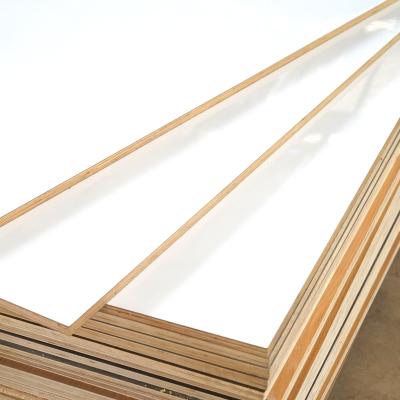
Fiberboard, also known as density board, is a man-made board material made by adding urea-formaldehyde resin or other adhesives to wood fiber or other plant fiber raw materials. Fiberboard has excellent physical and mechanical properties and processing characteristics, and is widely used in industries such as furniture manufacturing, construction, and interior decoration. Today, Cheng Cheng will provide a brief introduction to fiberboard and its national standards.
Fiberboard can be divided into soft fiberboard, semi-hard fiberboard (medium-density fiberboard), and hard fiberboard based on density. Medium-density fiberboard, as a homogeneous porous material, is widely used as a natural wood alternative. It offers low cost, simple processing, and high utilization rate, making it more economical than natural wood. The national standard "GB/T 11718-2021 Medium Density Fiberboard" provides detailed specifications for medium-density fiberboard products. The standard defines medium-density fiberboard (MDF) as a board made from wood or other plant fibers, processed through fiber preparation, applied with synthetic resin, and pressed under heat and pressure, with a density range of 0.65 g/cm³ to 0.80 g/cm³. This standard primarily applies to dry-process MDF. Depending on the intended use, MDF can be categorized into four types: general-purpose, furniture, load-bearing, and construction. Specific applicable conditions and type codes are shown in the table below.
The quality requirements for MDF primarily include appearance, dimensions, density, moisture content, physical and mechanical properties, moisture resistance, formaldehyde emission limits, and other requirements. Physical and mechanical properties are the core indicators. Dry MDF primarily includes static flexural strength, elastic modulus, internal bonding strength, and water absorption thickness expansion. Wet and high-humidity MDF also requires moisture resistance testing. Regarding formaldehyde emission limits, indoor medium-density fiberboard must meet the requirements of "GB 18580-2017 Formaldehyde Emission Limits for Artificial Boards and Their Products for Indoor Decorative and Renovation Materials." For furniture-grade medium-density fiberboard for outdoor use, these limits are generally determined through negotiation between the supplier and the buyer. Other requirements, depending on the specific needs of the intended use, primarily concern screw-holding strength, surface absorption properties, and dimensional stability.
Editor Cheng Cheng's Conclusion: Medium-density fiberboard (MDF) boasts a homogeneous porous structure, moderate density and strength, good reworkability, and excellent acoustic properties. It is a preferred material for furniture, decorative materials, television casings, speakers, and musical instruments, and accounts for a significant portion of the production of artificial board materials. Consumers are advised to select MDF products based on their intended use and environment to maximize their lifespan and ensure safety.