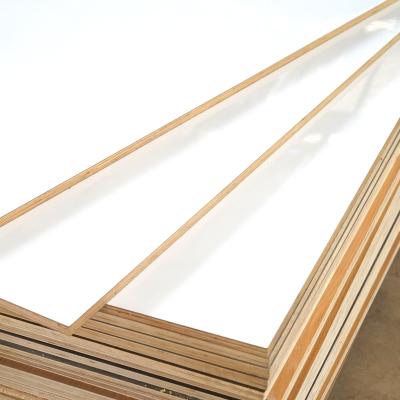
1. Wood
Wood is one of the most common raw materials for particleboard, primarily including pine, eucalyptus, willow, locust, and poplar. Wood particleboard offers advantages such as hardness, high strength, and resistance to deformation. It is also environmentally friendly and renewable. However, wood is relatively expensive, and its disadvantages, such as susceptibility to moisture and deformation, are not negligible.
2. Bamboo
Bamboo is a relatively new raw material for particleboard. It offers advantages such as light weight, high strength, and moisture and insect resistance, while being relatively affordable and cost-effective. However, bamboo is more difficult to process and its lifespan is not as long as wood.
3. Straw
Straw is a relatively environmentally friendly raw material for particleboard, primarily made from stalks such as corn stalks, rice straw, and wheat straw. Straw particleboard is relatively inexpensive and offers advantages such as environmental friendliness, light weight, and thermal insulation. However, straw particleboard has lower strength and stability and is susceptible to moisture and deformation.
Sawdust: Sawdust is a type of particleboard raw material. It is made by crushing wood into granules using a wood crusher. While wood dust particleboard offers advantages such as low cost and environmental friendliness, it also suffers from poor strength and stability, making it susceptible to deformation due to moisture.