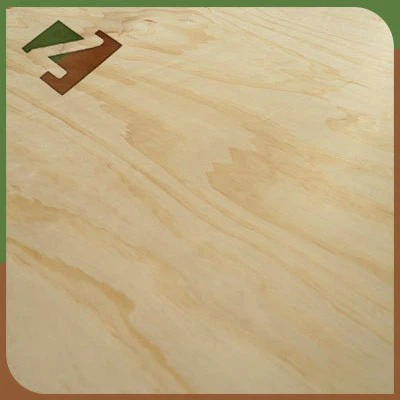
As a supplier of Beech Veneer Face Plywood, I am often asked about the flexural modulus of this product. In this blog post, I will delve into what the flexural modulus is, why it matters for Beech Veneer Face Plywood, and how it impacts its performance in various applications.
Understanding Flexural Modulus
The flexural modulus, also known as the modulus of elasticity in bending, is a measure of a material's stiffness when subjected to bending forces. It represents the ratio of stress to strain within the elastic range of the material. In simpler terms, it tells us how much a material will bend under a given load before it reaches its elastic limit and starts to deform permanently.
Mathematically, the flexural modulus (E) is calculated using the formula:
[ E = \frac{\sigma}{\epsilon} ]
where (\sigma) is the stress (force per unit area) applied to the material and (\epsilon) is the resulting strain (deformation per unit length).


A higher flexural modulus indicates that a material is stiffer and will deform less under a given load. Conversely, a lower flexural modulus means the material is more flexible and will bend more easily.
Importance of Flexural Modulus for Beech Veneer Face Plywood
Beech Veneer Face Plywood is a popular choice for a wide range of applications, including furniture making, interior decoration, and cabinetry. The flexural modulus of this plywood plays a crucial role in determining its suitability for these applications.
Structural Integrity
In furniture and cabinetry, Beech Veneer Face Plywood is often used to construct shelves, drawers, and other load - bearing components. A high flexural modulus ensures that these components can support the weight of items placed on them without excessive bending or sagging. This is essential for maintaining the structural integrity of the furniture over time.
Aesthetic Appeal
Excessive bending or deformation can also affect the aesthetic appeal of the finished product. For example, in interior decoration, a warped or sagging panel of Beech Veneer Face Plywood can be visually unappealing. By having a suitable flexural modulus, the plywood can maintain its flatness and smooth surface, enhancing the overall look of the space.
Durability
When a material is subjected to repeated bending or flexing, it can experience fatigue and eventually fail. A plywood with an appropriate flexural modulus is better able to withstand these cyclic loads, increasing its durability and lifespan.
Factors Affecting the Flexural Modulus of Beech Veneer Face Plywood
Several factors can influence the flexural modulus of Beech Veneer Face Plywood:
Wood Species and Quality
Beech wood itself has certain inherent properties that affect the flexural modulus. The quality of the beech veneer, including its density, grain pattern, and moisture content, can have a significant impact. Higher - density beech veneer generally has a higher flexural modulus.
Plywood Construction
The number of plies, the orientation of the grain in each ply, and the type of adhesive used in the plywood construction also play a role. A well - constructed plywood with properly aligned plies and a high - quality adhesive will have a more consistent and higher flexural modulus.
Manufacturing Process
The manufacturing process, including the pressing temperature, pressure, and duration, can affect the bonding between the plies and the overall structure of the plywood. A well - controlled manufacturing process can result in a plywood with a more uniform and higher flexural modulus.
Typical Flexural Modulus Values for Beech Veneer Face Plywood
The flexural modulus of Beech Veneer Face Plywood can vary depending on the factors mentioned above. Generally, the flexural modulus of high - quality Beech Veneer Face Plywood ranges from 8,000 to 12,000 MPa (megapascals).
It's important to note that these values are approximate and can vary based on the specific product and manufacturing conditions. When selecting Beech Veneer Face Plywood for a particular application, it's advisable to consult the manufacturer's technical specifications to ensure that the flexural modulus meets the requirements of the project.
Comparing Beech Veneer Face Plywood with Other Plywood Types
To better understand the flexural modulus of Beech Veneer Face Plywood, it can be helpful to compare it with other types of plywood.
Birch Veneer Face Plywood
Birch Veneer Face Plywood is another popular choice for furniture and interior applications. It typically has a flexural modulus in the range of 9,000 to 13,000 MPa. While the values overlap with those of Beech Veneer Face Plywood, birch plywood may be slightly stiffer on average.
FSC Certified White Oak Faced Plywood For Furniture
White oak - faced plywood often has a higher flexural modulus, ranging from 11,000 to 14,000 MPa. This makes it a good choice for applications where high stiffness is required, such as heavy - duty furniture or structural components.
Applications Based on Flexural Modulus
The flexural modulus of Beech Veneer Face Plywood can guide its selection for different applications:
Low - Load Applications
For applications where the load is relatively low, such as decorative panels or lightweight furniture components, a Beech Veneer Face Plywood with a lower flexural modulus may be sufficient. This can help reduce costs while still providing an aesthetically pleasing finish.
High - Load Applications
In high - load applications, such as shelves for heavy books or industrial cabinets, a Beech Veneer Face Plywood with a higher flexural modulus is recommended. This ensures that the components can withstand the weight without significant deformation.
Conclusion
The flexural modulus is a critical property of Beech Veneer Face Plywood that affects its structural integrity, aesthetic appeal, and durability. As a supplier, I understand the importance of providing customers with plywood that meets their specific requirements. By considering the factors that influence the flexural modulus and comparing it with other plywood types, customers can make informed decisions when selecting Beech Veneer Face Plywood for their projects.
If you are interested in purchasing Beech Veneer Face Plywood or have any questions about its flexural modulus or other properties, please feel free to contact us. We are happy to assist you in finding the right product for your needs.
References
- Forest Products Laboratory. Wood Handbook: Wood as an Engineering Material. USDA Forest Service, 2010.
- ASTM D1037 - 12. Standard Test Methods for Evaluating Properties of Wood - Base Fiber and Particle Panel Materials. ASTM International, 2012.