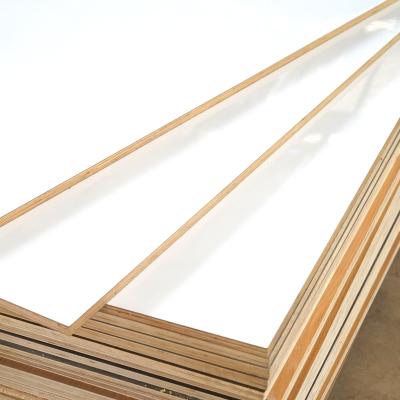
Product Thickness Specification System
1. The basic thickness range is 2-30 mm, forming a complete specification series.
2. Building boards mostly use thin specifications of 3-15 mm.
3. Structural-bearing boards are concentrated in the 15-30 mm range.
4. 18 mm is the benchmark thickness for the furniture manufacturing industry.
Correlation between Physical Properties and Thickness
1. Flexural strength increases exponentially with increasing thickness.
2. Boards 12 mm and above have load-bearing capacity.
3. Thin boards (<6 mm) are suitable for curved surface shaping.
4. Thick boards (>20 mm) have over 40% increased screw retention.
Application Matching Principles
1. 9-12 mm specifications are preferred for interior decoration projects.
2. Custom cabinets require a thickness of 18 mm or above.
3. Lightweight 6 mm thin boards can be used for exhibition props.
4. Waterproof 25 mm products must be used for building formwork.
Key Factors in Procurement Decisions
1. Based on GB/T Verify thickness tolerances according to the 11718-2021 standard
2. Examine the synergistic effect between density parameters and thickness
3. For humid environments, choose thicker, moisture-resistant products.
4. Allow for thickness margins for special-shaped processing requirements